Trial Balance Explained: Meaning, Types, Preparation, Examples, Errors, Uses, and Its Role in Accurate Accounting Records for Students and Businesses
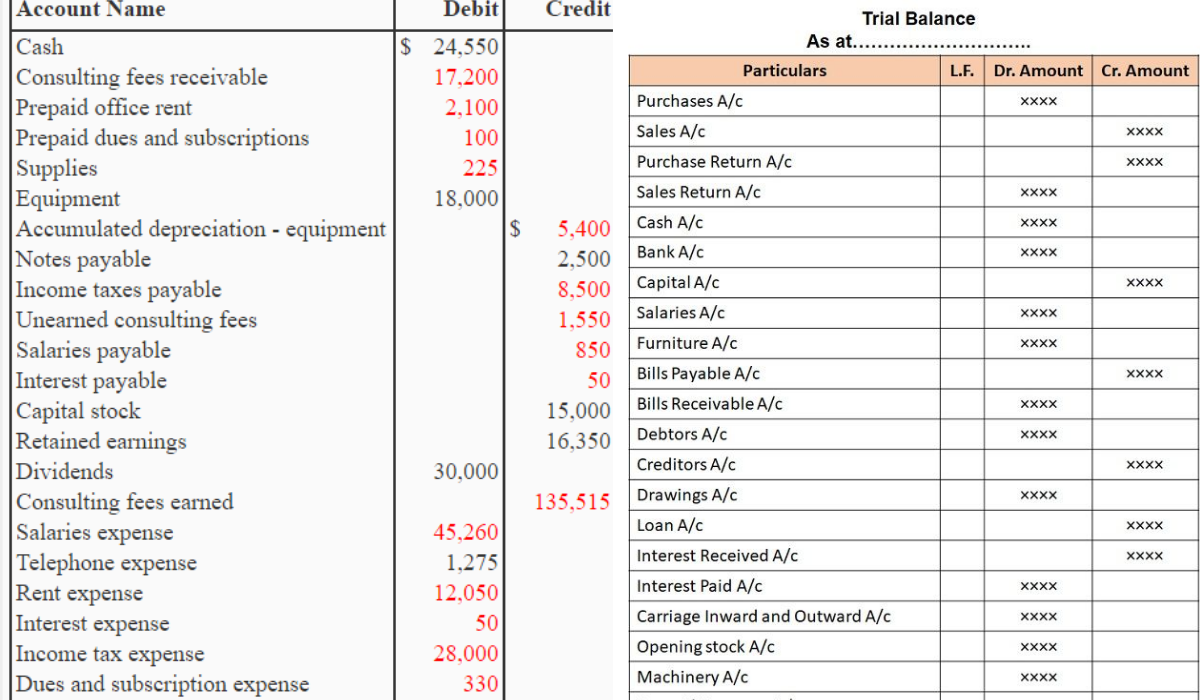
Understanding trial balance concepts is essential for students, bookkeepers, business owners, and accounting professionals. It is an important part of the accounting cycle because it brings ledger balances together in one organized statement. By comparing debit and credit totals, accountants can perform an initial mathematical check before preparing financial statements. Although a balanced report does not guarantee that every transaction is completely correct, it provides a useful checkpoint for identifying certain posting, calculation, and recording errors. This makes it a practical tool for maintaining organized accounting records and preparing reliable financial information.
| Quick Bio | Details |
|---|---|
| Topic | Trial Balance |
| Main Field | Accounting |
| Purpose | Checking debit and credit equality |
| Main Components | Account names, debit balances, credit balances |
| Common Types | Unadjusted, adjusted, post-closing |
| Used By | Accountants, bookkeepers, students, businesses |
| Related Records | General ledger and financial statements |
What Is a Trial Balance?
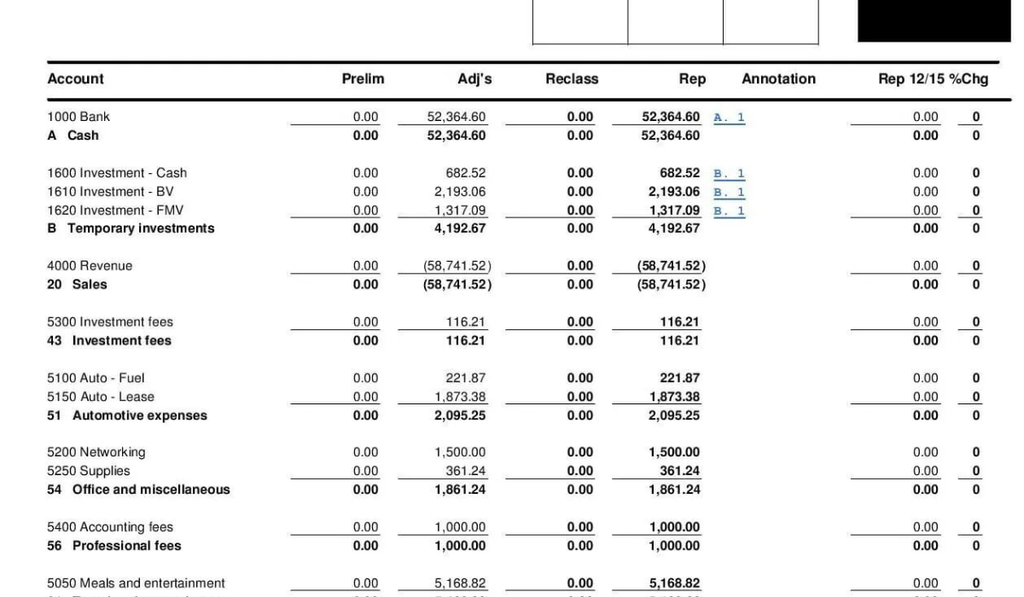
A trial balance is a statement that summarizes the balances of accounts recorded in a general ledger at a particular date. Accounts with debit balances are normally placed in the debit column, while accounts with credit balances are placed in the credit column. The totals of both columns are then compared. Under double-entry bookkeeping, the totals should agree when entries have been recorded and posted correctly. This document is generally an internal accounting working paper rather than a primary external financial statement.
Why Trial Balance Matters in Accounting
The main importance of a trial balance comes from its ability to provide a structured check of ledger balances. When the debit and credit totals agree, the accountant has evidence that the mathematical side of the double-entry system is aligned. If the totals differ, an investigation is necessary before financial statements are finalized. It can therefore help locate certain errors made during journalizing, posting, totaling, or balancing accounts. However, agreement between the columns should be viewed as a checkpoint rather than absolute proof that the accounting records contain no mistakes.
Connection With Double-Entry Bookkeeping
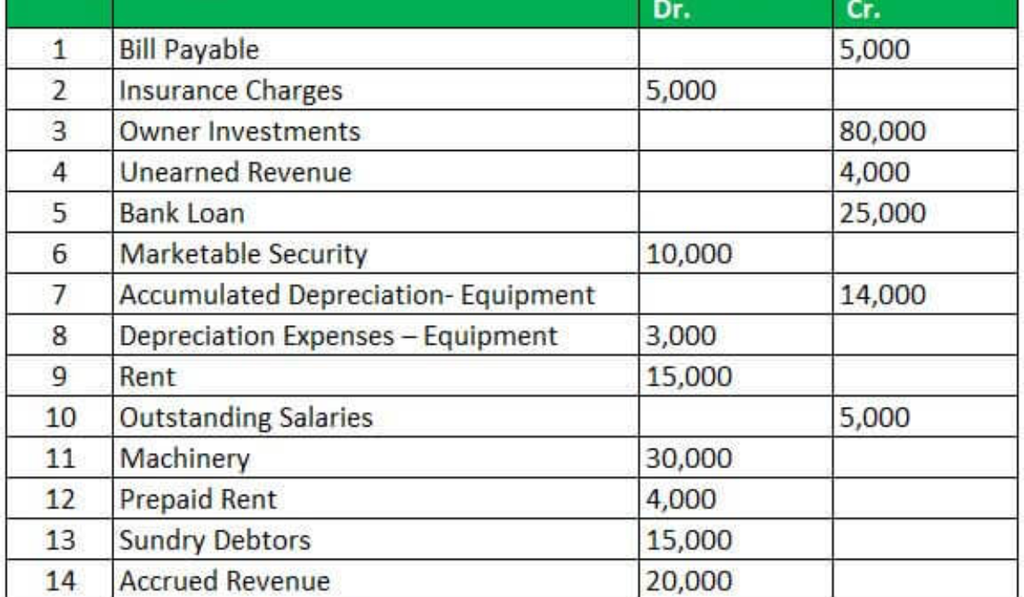
A trial balance is closely connected with double-entry bookkeeping because every transaction normally affects at least two accounts. One side receives a debit and another side receives a credit of equal value. After transactions are posted to ledger accounts, their ending balances can be collected into a single list. The resulting totals should correspond because the underlying double-entry system maintains equal debit and credit amounts. This relationship makes the report useful for checking the mathematical consistency of accounting records before additional reporting procedures are completed.
Main Purpose of a Trial Balance
The primary purpose of a trial balance is to compare the total debit balances with the total credit balances. This comparison can reveal discrepancies that require investigation. It also creates a convenient summary of ledger accounts for the next stages of accounting. Accountants may use the information when making adjustments and preparing income statements, balance sheets, and other reports. A balanced result does not establish that all transactions were correctly classified or completely recorded, but it does provide an important preliminary control over the accounting process.
Information Included in the Report
A typical trial balance contains several basic pieces of information. The heading usually identifies the business, the name of the report, and the reporting date. Account names are then listed, followed by separate debit and credit columns. Depending on the accounting system, accounts may be arranged according to a chart of accounts or accounting statement order. At the bottom, the debit and credit columns are totaled. The totals are compared to determine whether the ledger balances mathematically. Standard educational examples commonly follow this simple structure.
Debit and Credit Columns Explained
In a trial balance, debit and credit columns classify the ending balance of each ledger account. Assets and expenses commonly carry debit balances, while liabilities, equity, and revenue commonly carry credit balances. There are exceptions for certain contra accounts and unusual circumstances, so account classification should always be considered carefully. The purpose of the columns is not to show cash inflows and outflows directly. Instead, they represent the debit or credit nature of the corresponding ledger balance under the rules of double-entry accounting.
Assets in the Trial Balance
Asset accounts appearing in a trial balance may include cash, bank accounts, accounts receivable, inventory, equipment, vehicles, buildings, and prepaid expenses. Many asset accounts normally have debit balances because increases in assets are generally recorded as debits. The exact accounts depend on the business and its chart of accounts. When these balances are transferred into the report, they help create a summarized view of the ledger. Reviewing asset balances can also help accountants identify unusual amounts that may require further investigation or reconciliation.
Liabilities and Equity Accounts
Liability and equity accounts are important components of a trial balance because they represent obligations and ownership interests recorded by the business. Common liability accounts include accounts payable, loans, accrued obligations, and other amounts owed. Equity accounts may include contributed capital, retained earnings, or drawings depending on the business structure. These accounts commonly carry credit balances, although specific circumstances can create different balances. Reviewing them alongside assets and expenses provides a broader understanding of how the ledger is organized before formal financial statements are prepared.
Revenue and Expense Accounts
Revenue and expense accounts are also summarized in a trial balance. Revenue generally carries a credit balance because income increases equity, while expenses generally carry debit balances because they reduce profit. Examples include sales revenue, service income, rent expense, salaries expense, utilities, insurance, and advertising. Listing these accounts gives accountants a useful starting point for determining the information that will eventually appear in an income statement. The report therefore connects everyday bookkeeping activity with the financial reporting process used to communicate business performance.
Unadjusted Trial Balance
An unadjusted trial balance is prepared before period-end adjusting entries are posted. It represents the balances currently contained in the general ledger after routine transactions have been recorded and posted. Its purpose is to provide an early checkpoint before adjustments such as depreciation, accruals, deferrals, or inventory-related entries are considered. OpenStax identifies preparation of the unadjusted version as a step in the accounting cycle following analysis, journalizing, and posting of transactions.
Adjusted Trial Balance
An adjusted trial balance is prepared after necessary adjusting entries have been recorded. These adjustments may address accrued expenses, accrued revenue, prepaid amounts, depreciation, inventory changes, or other period-end accounting matters. Once adjustments are posted, the updated account balances are collected and checked again. The adjusted version is especially important because it provides the account balances used to prepare many financial statements. It therefore represents a later stage of the accounting cycle than the unadjusted version and incorporates information needed for more complete period-end reporting.
Post-Closing Trial Balance
A post-closing trial balance is prepared after temporary revenue, expense, and other appropriate temporary accounts have been closed for the accounting period. Its purpose is to confirm that the remaining ledger accounts continue to have equal debit and credit totals after closing entries. Permanent accounts, such as many asset, liability, and equity accounts, generally remain open for the next accounting period. This report provides another checkpoint in the accounting cycle and helps establish the opening ledger structure for the following period.
How to Prepare a Trial Balance
Preparing a trial balance begins with obtaining the latest balances from the general ledger. Each relevant account is identified, and its ending debit or credit balance is placed in the appropriate column. The debit amounts are then totaled separately from the credit amounts. Finally, both totals are compared. If they agree, the accounting records pass this particular mathematical check. If they do not agree, the accountant must investigate the difference. Careful preparation and reconciliation reduce the chance of carrying an unresolved discrepancy into financial reporting.
Example of a Simple Trial Balance
Consider a small business with cash of $8,000, equipment of $5,000, accounts payable of $3,000, owner’s capital of $7,000, sales revenue of $6,000, and expenses of $4,000. The accountant would place each ending balance in the appropriate debit or credit column based on its account classification. After all balances are entered, the columns are totaled and compared. This simple example demonstrates how the report organizes different ledger accounts into one summarized schedule, making mathematical review easier before financial statements are prepared.
Errors That Can Be Detected
A trial balance can help detect certain errors that cause debit and credit totals to become unequal. Examples include posting an amount to only one side of a transaction, entering different amounts on the two sides, making some totaling mistakes, or transferring a balance incorrectly from a ledger. When the columns do not agree, the difference provides a starting point for investigation. Accountants can review journals, ledgers, calculations, and posting records systematically until the source of the discrepancy is identified and corrected.
Errors That May Remain Undetected
A balanced trial balance does not prove that every accounting record is correct. Some errors affect both sides equally and therefore leave the totals unchanged. Examples include completely omitting a transaction, recording an incorrect amount on both sides, reversing debit and credit entries, or posting an amount to the wrong account of the same general type. Compensating errors can also offset one another. For this reason, accountants must use additional controls, reconciliations, supporting documents, and reviews rather than relying only on column equality.
Trial Balance and Financial Statements
A trial balance provides organized ledger information that can be used in preparing financial statements. Revenue and expense accounts can contribute to an income statement, while assets, liabilities, and equity accounts contribute to a statement of financial position. Adjustments may need to be completed before the relevant balances are used. The report therefore acts as a bridge between detailed bookkeeping records and summarized financial reporting. It helps accountants gather account information in one place, reducing the need to review every individual transaction while preparing routine reports.
Role in the Accounting Cycle
Within the accounting cycle, a trial balance usually appears after transactions have been journalized and posted to ledger accounts. Depending on the accounting process, an unadjusted version may be followed by adjusting entries and an adjusted version. Closing entries may then be posted, followed by a post-closing version. This sequence provides several checkpoints throughout the reporting process. Understanding where each version belongs helps accounting students and business owners see how individual transactions eventually become organized financial information used for reporting and analysis.
Using Accounting Software
Modern accounting software can generate a trial balance automatically from recorded ledger transactions. This can save time and reduce manual arithmetic, particularly for businesses with many accounts and frequent transactions. However, automation does not eliminate the need for accounting knowledge. Users still need to establish appropriate account classifications, review unusual balances, reconcile supporting records, and investigate discrepancies. Software can accurately process incorrect instructions or classifications if the underlying setup is wrong. Human review therefore remains important even when accounting technology performs calculations and produces reports automatically.
Importance for Students
Learning trial balance procedures is valuable for accounting students because it connects several fundamental concepts. Students can see how journal entries move into ledger accounts and how those balances are later summarized. It also reinforces the relationship between debits and credits, account classifications, adjusting entries, and financial statements. Practice exercises can help learners identify differences between detected and undetected errors. Once students understand this process, topics such as financial statements, closing entries, reconciliations, and accounting cycles become easier to understand because they build on the same underlying bookkeeping principles.
Importance for Small Businesses
For small businesses, a trial balance can provide a straightforward way to review bookkeeping records before financial reports are finalized. Business owners can use it with their accountant or bookkeeper to examine unusual account balances and confirm that the ledger is mathematically balanced. It may also help identify areas requiring reconciliation, such as bank accounts, receivables, payables, or expense classifications. Although small businesses may use accounting software instead of manually preparing reports, understanding what the report represents helps owners make better use of the financial information their systems provide.
Best Practices for Accurate Preparation
Maintaining accurate trial balance records requires consistent bookkeeping practices. Transactions should be recorded promptly, supporting documents should be retained, and ledger accounts should be reviewed regularly. Bank and subsidiary records should be reconciled where appropriate. At period-end, accountants should complete necessary adjustments before relying on final balances for reporting. When a difference appears, the discrepancy should be investigated rather than simply forcing the totals to agree. A disciplined review process improves reliability and helps prevent unresolved accounting issues from moving into subsequent reporting periods.
Common Questions About Trial Balance
Many learners initially confuse a trial balance with a balance sheet because both contain accounting balances. However, they serve different purposes. The former is primarily an internal accounting schedule used to check ledger balances, while the balance sheet is a formal financial statement presenting assets, liabilities, and equity according to the applicable reporting framework. Another common misconception is that equal totals prove the books are error-free. In reality, some errors can affect debit and credit amounts equally and remain hidden. Understanding these distinctions is essential for accurate accounting education.
Difference Between Trial Balance and Balance Sheet
The trial balance and balance sheet have different roles in accounting. The first brings ledger balances together to test whether total debits and credits agree. The second presents an entity’s financial position through assets, liabilities, and equity and is designed for financial reporting purposes. The report may contain revenue and expense accounts that are not presented as separate categories on the balance sheet. Therefore, equal debit and credit totals should not be confused with a completed statement of financial position. Each document has its own purpose within accounting.
Benefits of Regular Review
Regular review of a trial balance can help accounting teams identify unusual movements, missing postings, unexpected balances, or mathematical discrepancies sooner. Early detection can make corrections easier because supporting documents and transaction details are still accessible. Monthly or periodic reviews may also support management reporting and year-end preparation. The exact review frequency depends on the organization’s size, transaction volume, accounting procedures, and reporting requirements. A consistent review routine can strengthen internal controls while helping businesses maintain more organized financial records throughout the reporting period.
Final Thoughts on Trial Balance
A trial balance remains an important accounting tool because it connects detailed ledger activity with the preparation of financial statements. It organizes account balances, compares debit and credit totals, and provides an opportunity to investigate discrepancies before reporting is completed. Its usefulness is greatest when combined with reconciliations, supporting documentation, appropriate adjustments, and careful professional review. For students, it builds a foundation for understanding the accounting cycle, while businesses can use it as a practical checkpoint within their bookkeeping process. For additional background, see Wikipedia’s related Trial Balance article.


Post Comment